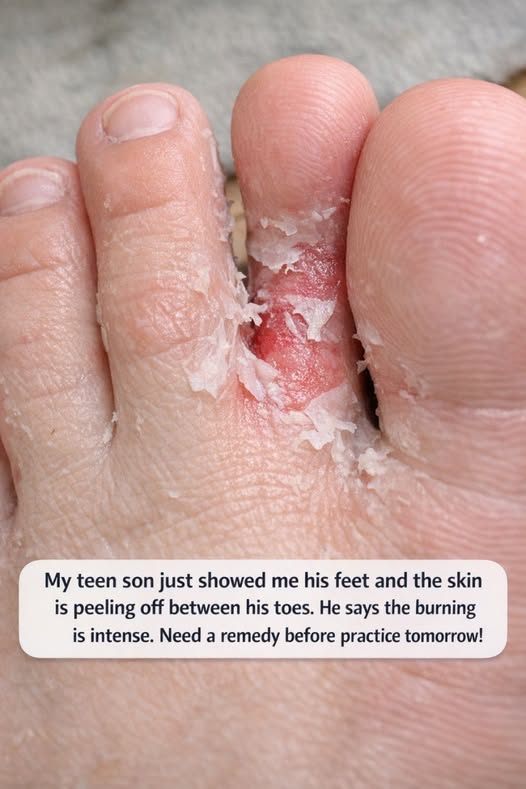
At first, it looked minor.
Just a little peeling skin between the toes. Slight redness. Maybe dryness from practice, sweat, or tight shoes. Easy to ignore.
But by the time he pulled off his socks that evening, the irritation had become impossible to overlook. The skin looked raw and cracked, almost white in certain spots from constant moisture. Walking hurt. Putting pressure on his foot burned. Even the air hitting the area felt uncomfortable.
That was the moment it stopped being “just dry skin.”
What many people do not realize is that the space between the toes creates the perfect environment for fungal infections to grow. Darkness. Heat. Sweat. Friction. Hours trapped inside athletic shoes or damp socks. For active kids, teenagers, and athletes especially, it becomes an ideal breeding ground for athlete’s foot, one of the most common fungal skin infections in the world.
And while the name sounds harmless, the reality can become miserable if ignored.
Athlete’s foot often starts subtly. A little itching. Slight peeling. Tiny cracks in the skin that seem more annoying than serious. But fungal infections rarely disappear on their own once they fully settle in. Instead, they slowly spread.
The itching intensifies.
The skin begins peeling more aggressively.
Burning sensations appear.
Painful cracks can form between the toes or along the bottom of the foot.
In severe cases, the damaged skin barrier becomes vulnerable to bacterial infections, which can cause swelling, pus, fever, and serious complications requiring medical treatment.
That is why early action matters so much.
Not because the condition is rare or shameful, but because it is extremely common and highly treatable when addressed quickly.
For athletes, the risk becomes even higher. Locker rooms, shared showers, sweaty shoes, damp socks, and long hours of practice all create conditions fungi thrive in. Wrestlers, runners, soccer players, basketball players, and gym athletes frequently deal with it at some point, even if few openly talk about it.
And that silence often makes the experience worse.
Many young people become embarrassed the moment they notice visible peeling or odor. Instead of asking for help, they hide it. They continue wearing the same damp shoes. They avoid mentioning the pain. Some even become anxious about removing their shoes around teammates or friends.
But fungal infections are not a sign of poor hygiene or weakness.
They are simply infections.
Common ones.
Treatable ones.
And the sooner they are handled, the easier recovery becomes.
The first step tonight is simple but important: slow down and care for the skin gently.
Cool or lukewarm water can immediately calm the burning sensation. Washing the feet carefully with mild soap removes sweat, bacteria, and debris without causing further irritation. But the most important step afterward is thorough drying.
Fungi love moisture.
Even tiny amounts trapped between the toes allow the infection to continue thriving. Carefully patting the area dry — especially between each toe — makes a huge difference.
After cleaning comes treatment.
Over-the-counter antifungal creams, sprays, or powders are often extremely effective when started early. Ingredients commonly used for athlete’s foot work by attacking the fungus directly and preventing it from spreading further across the skin.
Consistency matters more than speed.
Many people stop treatment the moment symptoms improve, only for the infection to return days later because the fungus was never fully eliminated. Continuing treatment for the recommended period is often the key to preventing repeated flare-ups.
At the same time, footwear habits need attention too.
Fresh, clean socks every day.
Moisture-wicking fabrics instead of heavy cotton when possible.
Shoes allowed to fully dry between uses.
Breathable footwear whenever appropriate.
Sometimes even rotating between two pairs of athletic shoes helps reduce moisture buildup enough to improve recovery dramatically.
Small changes can completely shift the environment fungi rely on.
But beyond the creams, powders, and socks, another part matters just as much — the conversation afterward.
Because for many kids or teenagers, the emotional discomfort feels bigger than the physical symptoms.
Embarrassment grows quickly around anything involving appearance, odor, or the body. A young athlete may quietly worry that teammates will notice. They may fear being judged as “dirty” even when the infection has little to do with cleanliness. Some become self-conscious enough to avoid locker rooms, pools, or changing around others.
That is why reassurance matters.
Calmly explaining that athlete’s foot is extremely common changes everything. Letting him know this happens to athletes, students, adults, and active people everywhere removes shame from the situation. Instead of feeling singled out, he understands that this is simply a medical issue — one that can be fixed.
That emotional support becomes part of the healing itself.
Because trust matters long after the skin recovers.
When kids feel safe admitting something is wrong early, problems get treated before they become serious. But when embarrassment teaches them to hide discomfort, even small conditions can quietly worsen over time.
Tonight’s peeling skin may seem minor in the grand scheme of life.
But moments like this quietly teach bigger lessons about health, self-care, and openness.
The body gives warnings for a reason.
Pain, irritation, cracking, burning — these signals are not meant to be ignored out of embarrassment or toughness. Paying attention early often prevents much bigger problems later.
And fortunately, athlete’s foot is one of those conditions where simple, consistent care usually works remarkably well.
Cool water.
Gentle washing.
Careful drying.
Clean socks.
Breathable shoes.
Antifungal treatment.
And most importantly, reassurance instead of shame.
Because healing is not only about clearing the infection.
Sometimes it is also about reminding someone they never needed to hide it in the first place.
 admin
admin