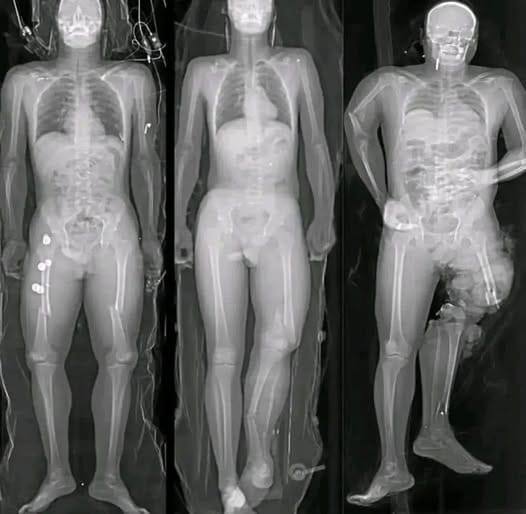
The posts you’re describing follow a very familiar pattern: strong visuals, vague warnings, and a message that feels urgent but lacks clear evidence. During and after the pandemic, content like this has spread widely because it taps into real fears people experienced around COVID-19 and the uncertainty that came with it. Even now, those emotions can be easily reactivated by suggestive imagery—like syringes pointed at the heart—designed to create a sense of danger.
What’s important to understand is that these posts are built for impact, not accuracy.
Images implying that vaccines directly harm the heart often distort or oversimplify real medical discussions. For example, there have been rare cases of myocarditis (inflammation of the heart muscle) reported after certain COVID-19 vaccines, particularly in younger males. However, major health authorities like the World Health Organization and the Centers for Disease Control and Prevention have consistently emphasized that these cases are uncommon, typically mild, and that the benefits of vaccination outweigh the risks for the vast majority of people.
That nuance is exactly what viral posts leave out.
Instead of explaining probability, recovery rates, or context, misleading content reduces everything to a single emotional trigger: fear. A dramatic image plus a phrase like “you should know this” suggests hidden danger, even when no new or credible information is actually being presented. It creates the illusion that something urgent is being revealed, when in reality it’s often recycled or misinterpreted data.
Another key factor is how algorithms work. Social media platforms tend to amplify content that generates strong reactions—especially fear, anger, or shock. So even if a post is misleading, its emotional intensity can push it into more people’s feeds. Over time, this repetition can make the message feel more believable, even without evidence.
This is why critical thinking becomes essential.
When you see a post like this, a few simple questions can help separate fact from manipulation:
- Does it cite a credible source or just use vague language?
- Is the claim supported by recognized medical organizations?
- Is it presenting balanced information, or only focusing on worst-case scenarios?
- Is the image meant to inform, or to provoke fear?
In many cases, you’ll find that the content doesn’t hold up under even basic scrutiny.
It’s also worth noting that misinformation doesn’t always come from bad intentions. Sometimes people share these posts because they are genuinely concerned or confused. The pandemic created an environment where information changed rapidly, and not everyone has access to clear, reliable explanations. But regardless of intent, the effect can still be harmful—causing unnecessary anxiety or leading people to make decisions based on incomplete information.
At the same time, it’s completely normal for people to have questions or concerns about their health. Vaccines, like any medical intervention, are not 100% risk-free. What matters is understanding those risks in context, rather than through exaggerated or misleading claims.
The bigger picture is this: we are now living in an information environment where emotional content often spreads faster than factual content. That doesn’t mean the truth isn’t available—it just means it requires a bit more effort to find.
Reliable sources—such as doctors, peer-reviewed research, and established health organizations—remain the best way to understand complex topics like vaccines. They provide context, acknowledge uncertainties, and update information as new evidence emerges. That’s very different from viral posts that aim for immediate impact without accountability.
In the end, the goal isn’t to ignore concerns—it’s to approach them with clarity.
Those dramatic images and messages may feel urgent, but urgency alone isn’t proof. Taking a moment to question, verify, and understand can make a big difference—not just in avoiding misinformation, but in protecting your own peace of mind.
 admin
admin