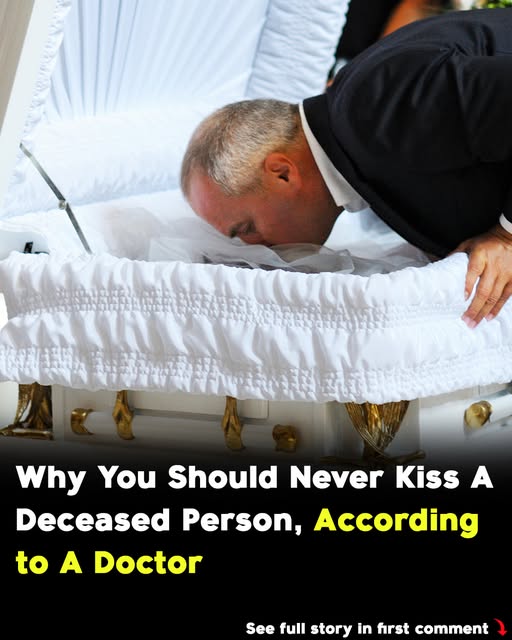
A Moldovan doctor has captured global attention after sharing a surprising and cautionary message about a tradition many families see as a final act of love. Dr. Viktor Ivanovik, who has built a large following on TikTok with nearly 300,000 supporters, posted a video discussing the health risks connected to kissing a loved one after they have passed away. His message was unexpected, direct, and quickly went viral across multiple platforms.
In his video, Ivanovik urges viewers, “Never kiss the deceased!” He stresses that while the gesture may feel emotional, respectful, or traditional in many cultures, it carries real health risks that people rarely consider during moments of grief. His warning isn’t meant to take away from the significance of saying goodbye, but rather to protect those who may unknowingly expose themselves to harmful bacteria.
According to Dr. Ivanovik, the process that begins shortly after a person passes is not visible to the eye. He explains that about nine hours after de*th, the body naturally begins a slow form of decomposition. This isn’t dramatic or immediately obvious, but it’s enough to activate certain bacterial changes in the skin and tissues. These bacteria are not always dangerous during normal life, but once the body can no longer fight them, they begin multiplying at a rapid rate.
Ivanovik notes that close physical contact during this stage—especially touching the face or kissing the skin—can expose the living to bacteria that may cause unexpected reactions. One of the possible outcomes he mentions is the loss of smell, a symptom that some people overlook or fail to connect to their exposure during farewells. He emphasizes that grieving individuals are often overwhelmed, and the emotional intensity of the moment can prevent them from thinking about potential health risks.
The doctor also highlighted that cultural customs often encourage physical closeness during the final goodbye. Many families feel that touching the hands or giving a final kiss is a meaningful way to honor the person they loved. Ivanovik is careful to acknowledge this, saying that he understands how deeply emotional these rituals can be. His goal is not to criticize tradition, but to offer scientific information that may help families make safer choices.
In many regions, funeral professionals already advise against direct contact with those who have passed, for reasons ranging from hygiene to personal safety. However, Ivanovik’s video brought the conversation to a much wider audience, especially younger viewers who may not be familiar with funeral procedures. By using simple language and relatable examples, he transformed a sensitive topic into an important public-health reminder.
The reaction online has been mixed but overwhelmingly curious. Some viewers expressed shock, saying they never realized this could be harmful. Others said they had heard similar warnings from medical professionals but never understood the reasoning behind them. A number of users thanked the doctor for bringing clarity to a subject that is rarely discussed openly.
Ultimately, Dr. Ivanovik’s message encourages people to honor loved ones in ways that feel meaningful and safe. While grief leads us to seek closeness, understanding the hidden health risks allows families to make informed decisions during one of life’s most emotional moments.
 admin
admin