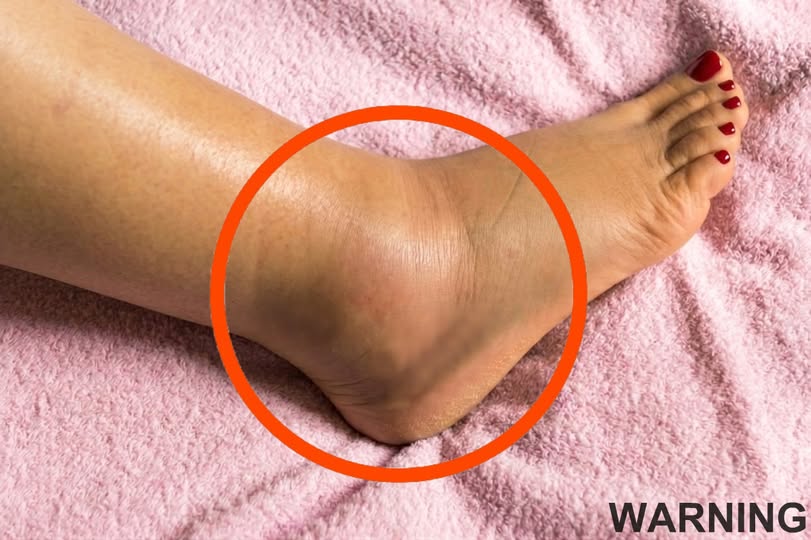
For many older adults, swollen feet and ankles begin so gradually that they seem easy to ignore.
A little puffiness after sitting too long.
Shoes feeling tighter at the end of the day.
Socks leaving deeper marks around the ankles than they used to.
At first, these changes may appear harmless — simply another inconvenience associated with aging. And sometimes, mild swelling really is linked to ordinary factors like gravity, heat, prolonged sitting, or standing for long periods.
But persistent swelling should never automatically be dismissed as “just getting older.”
Because in many cases, swollen feet are not the actual problem.
They are the body’s warning sign that something deeper may be happening beneath the surface.


7
Medical professionals refer to this type of swelling as edema — a buildup of fluid trapped in the body’s tissues. While mild fluid retention can happen temporarily for many reasons, swelling that becomes frequent, severe, painful, or suddenly worse deserves medical attention, especially in older adults.
One of the most common causes is poor circulation.
As people age, veins in the legs may weaken and struggle to push blood efficiently back toward the heart. This condition, sometimes related to chronic venous insufficiency, allows fluid to leak into surrounding tissues, leading to swelling around the feet and ankles.
Chronic Venous Insufficiency
Gravity makes the problem worse because fluid naturally collects in the lowest parts of the body during long periods of sitting or standing.
That is why swelling often appears more noticeable late in the day.
But circulation issues are only one possible explanation.
Doctors also pay close attention to swelling because it can sometimes signal stress involving major organs such as the heart, kidneys, or liver.
For example:
- Heart problems may reduce the body’s ability to circulate blood effectively, allowing fluid to accumulate in the legs and feet.
- Kidney disease can interfere with the body’s ability to remove excess fluid and sodium properly.
- Liver disease may affect proteins responsible for maintaining fluid balance within blood vessels.
Heart Failure
Kidney Disease
That is why sudden or unexplained swelling should never simply be ignored — particularly when it appears alongside other symptoms such as:
- Shortness of breath
- Chest pain
- Fatigue
- Redness or warmth in one leg
- Rapid weight gain
- Difficulty walking
- Severe pain
Those signs may indicate more urgent medical conditions requiring immediate evaluation.
In some cases, swelling in only one leg can also raise concern for a blood clot known as deep vein thrombosis (DVT), which can become life-threatening if untreated.
Deep Vein Thrombosis
Fortunately, many milder cases of swelling can improve significantly through lifestyle adjustments that support circulation and fluid balance.
Gentle movement is one of the simplest but most effective tools.
Walking, stretching, and light leg exercises help activate calf muscles, which function almost like pumps to move blood and fluid back upward toward the heart. Even small amounts of regular movement throughout the day can reduce pooling in the lower legs.
Elevating the legs also helps.
Raising the feet above heart level when resting allows gravity to assist fluid return rather than worsen accumulation. Many older adults find swelling decreases noticeably after periods of elevation.
Compression socks are another commonly recommended option.
Compression Socks
These specialized socks apply gentle pressure to the legs, helping veins move blood more effectively and reducing fluid buildup. Doctors often recommend them for circulation problems, prolonged sitting, or chronic swelling conditions.
Footwear matters too.
Supportive, properly fitting shoes reduce pressure on swollen tissues and improve comfort and mobility. Tight shoes or poor support can worsen discomfort significantly over time.
Diet also plays an important role.
Excess sodium causes the body to retain fluid more easily, making swelling worse for many individuals. Reducing highly processed foods and increasing intake of potassium-rich foods such as bananas, spinach, sweet potatoes, and avocados may help support healthier fluid regulation.
High Sodium Intake→Fluid Retention→Swelling (Edema)
Still, healthcare professionals stress that lifestyle changes should never replace proper medical evaluation when swelling becomes persistent or unusual.
The body often sends warning signs quietly before larger health problems develop fully.
Feet and ankles, in particular, can reveal circulation and fluid issues early because they sit at the lowest point of the body where gravity naturally pulls fluid downward.
That is why paying attention to swelling matters so much — especially for older adults hoping to preserve mobility, independence, and overall quality of life.
Because once walking becomes painful or balance becomes unstable, the consequences can extend far beyond discomfort alone. Reduced mobility increases fall risk, weakens muscles, limits independence, and often affects emotional well-being too.
In many ways, swollen feet are not simply about feet.
They are about the body communicating strain.
And sometimes, listening early can prevent far more serious problems later.
The encouraging news is that many underlying causes become far easier to manage when recognized early rather than ignored for months or years.
So while occasional mild swelling may happen harmlessly from time to time, persistent or changing swelling deserves attention — not fear, but attention.
Because protecting long-term health often begins with noticing the quiet signals the body sends first.
 admin
admin