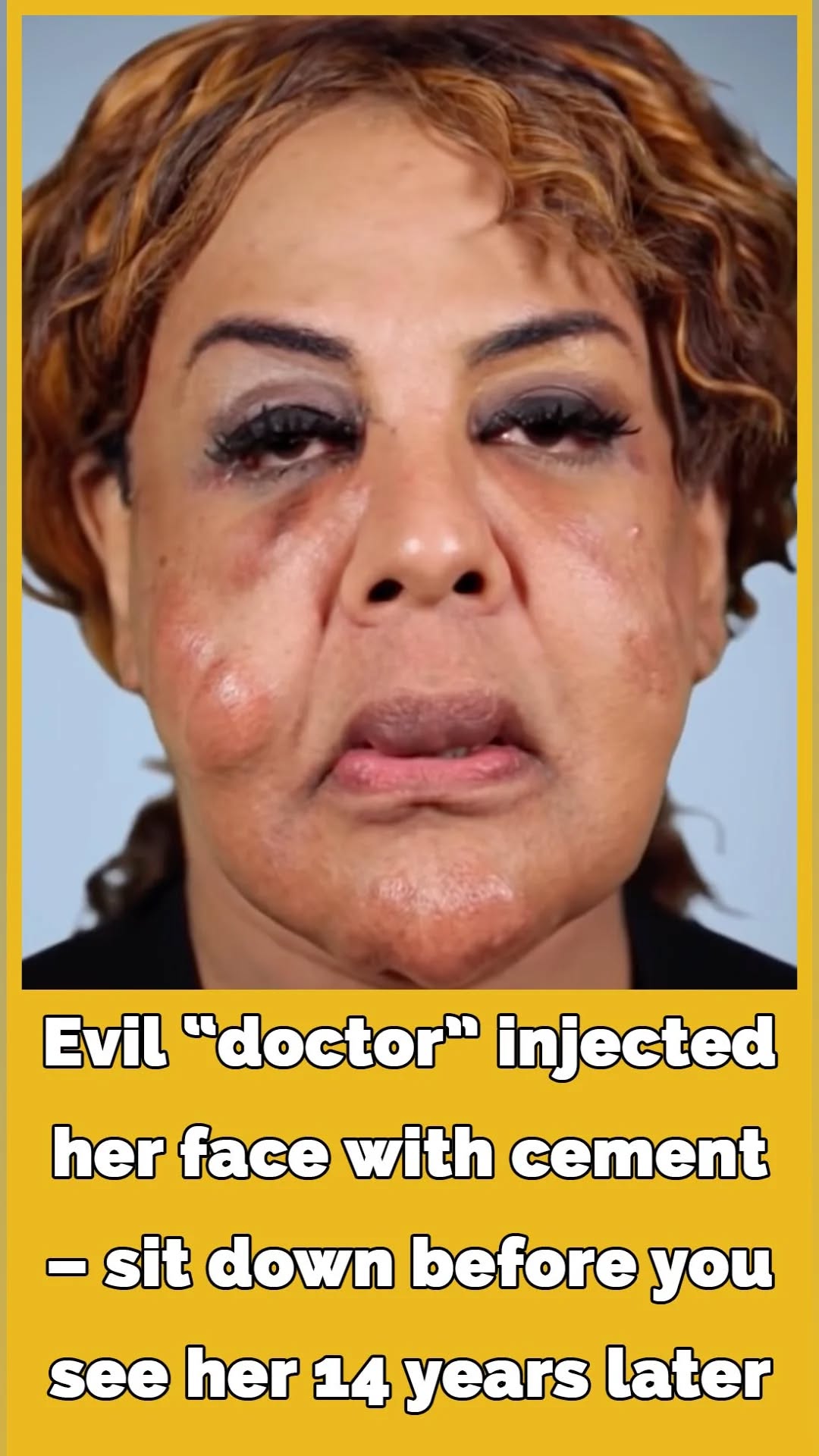
For years, Rajee Narinesingh avoided mirrors whenever possible.
Not because she didn’t recognize herself — but because the reflection staring back at her had become a painful reminder of trust, desperation, and irreversible choices made in pursuit of acceptance and beauty.
Long before the world knew her as the woman with the “cement face,” Rajee dreamed of something much simpler: to feel comfortable in her own skin.
Like many transgender women navigating a society that often places crushing pressure on appearance and femininity, she searched for ways to align her outward image with the identity she carried internally. But for individuals without financial privilege or access to safe medical care, that search can become dangerous quickly.
And in Rajee’s case, it nearly destroyed her life.
Hoping to enhance her appearance, she turned to underground cosmetic procedures performed by Oneal Ron Morris, a person who later became nationally infamous as the “toxic tush doctor.” Morris promised transformation at a fraction of the cost charged by licensed surgeons. What Rajee received instead were illegal injections containing toxic substances reportedly including cement, tire sealant, mineral oil, and other industrial materials never meant to enter the human body.
The consequences were devastating.
Over time, Rajee’s face became severely disfigured. Hardened lumps formed beneath her skin, distorting her cheeks, chin, and features in ways that drew immediate public attention whenever she stepped outside. The physical pain was enormous, but the emotional damage cut even deeper.
People stared openly.
Strangers laughed.
Others recoiled in shock.
The humiliation became so overwhelming that Rajee eventually withdrew from public life almost entirely. She spent years hiding inside her home, trapped not only by the damage done to her face but by the shame that followed it everywhere.
In interviews later, she would speak openly about the darkness of that period — the loneliness, depression, and feeling that her life had effectively ended.
But somehow, even at her lowest point, she refused to disappear completely.
Her turning point came when legitimate medical professionals finally stepped in to help.
At first, reconstructive efforts happened privately and gradually. Surgeons worked carefully to soften and remove portions of the hardened material from her face, though the procedures were delicate and dangerous due to the unknown substances embedded beneath her skin.
Later, Rajee’s story gained national attention through the television series Botched, where renowned surgeons attempted additional reconstructive work to restore both her appearance and her confidence.
The transformation was not instant.
It wasn’t a magical before-and-after moment like reality television often promises.
Healing came slowly.
Painfully.
Emotionally.
Each procedure improved her condition little by little, helping her reclaim parts of herself that she feared were gone forever. Makeup also became an important tool — not for hiding who she was, but for rebuilding comfort with her reflection and learning to face the outside world again.
Most importantly, Rajee began reclaiming something deeper than physical appearance:
Her dignity.
She eventually made the courageous decision to step back into public life fully, despite knowing the internet had already turned her into a viral spectacle for years. That decision required extraordinary strength. Even after reconstructive procedures, people still recognized her story instantly. Some viewed her with compassion. Others remained cruel.
But Rajee stopped allowing strangers to define her worth.
Instead, she transformed her suffering into purpose.
Meanwhile, legal consequences finally caught up with Oneal Ron Morris. Authorities prosecuted Morris for performing illegal cosmetic procedures that harmed multiple victims, and Morris was eventually sentenced to prison.
For many people, that outcome represented justice.
But what happened afterward surprised almost everyone.
According to Rajee, Morris later reached out asking for forgiveness.
Given everything she endured — the public humiliation, medical trauma, emotional devastation, and years lost to fear — many expected Rajee to respond with anger or bitterness.
Instead, she chose grace.
Not because she excused what happened.
Not because the pain disappeared.
But because she refused to let hatred define the rest of her life.
In interviews, Rajee described her suffering as strangely transformative, even referring to it at times as a “blessing” because it ultimately gave her a platform to help others avoid similar mistakes. That perspective stunned many people who heard her story.
How could someone survive such public suffering and still choose compassion?
Perhaps because Rajee understood something profound: surviving trauma changes people, but it does not always have to harden them.
Today, living in Florida, Rajee Narinesingh has rebuilt her life in ways that once seemed impossible during her darkest years. She has become an actress, author, motivational speaker, and outspoken advocate for transgender awareness and HIV education. She uses her story not for pity, but for warning and empowerment.
Her activism reaches people who often feel invisible — especially transgender individuals navigating poverty, discrimination, body image pressure, and lack of access to safe healthcare.
Rajee speaks openly about the dangers of black-market cosmetic procedures because she understands how desperation can push vulnerable people toward dangerous choices. She knows many individuals seeking underground enhancements are not driven by vanity alone, but by longing for acceptance, confidence, and survival in a world that frequently judges appearance mercilessly.
That honesty is part of what makes her story so powerful.
It is not simply a story about cosmetic disaster.
It is a story about identity.
Isolation.
Survival.
And the difficult journey toward self-worth after unimaginable humiliation.
What makes Rajee remarkable is not just that she survived being publicly mocked and physically harmed.
It is that she emerged from that experience still willing to help others.
Still willing to love.
Still willing to be seen.
For years, the world looked at Rajee Narinesingh and saw tragedy.
Now, many see something else entirely:
Strength.
Because the woman once reduced to headlines about “cement face” ultimately became far more than a victim.
She became a voice for people society often refuses to hear.
And in doing so, she turned the worst chapter of her life into hope for someone else’s future.
 admin
admin