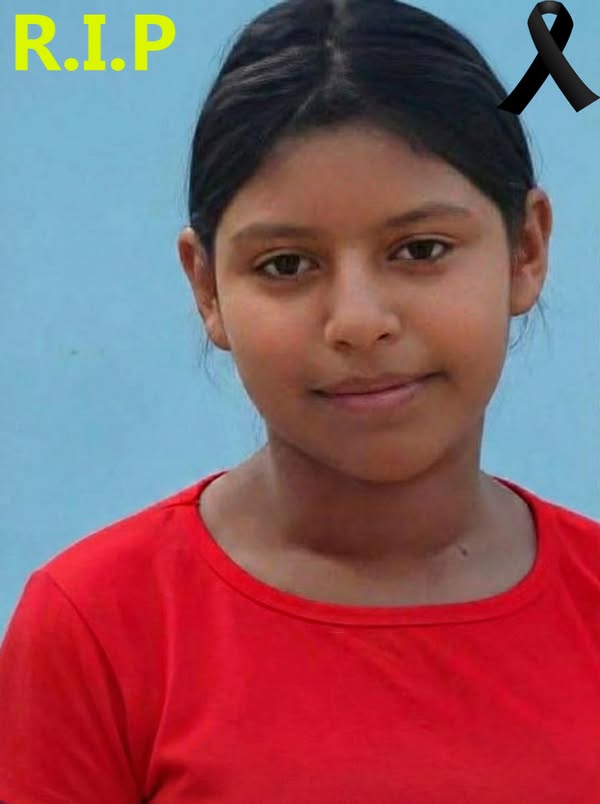
The first sign that something was wrong wasn’t a phone call or a missing poster.
It was the smell.
A neighbor reported it—faint at first, then impossible to ignore. What authorities discovered soon after in a vacant lot near a busy metro station would send shockwaves far beyond the neighborhood. A young girl, later identified as Perla, had been found lifeless—her small body abandoned in a place where people pass by every day without a second thought.
Within hours, sirens filled the streets. Yellow tape sealed off the area. Investigators moved in, while a devastated family began facing the unthinkable reality that no parent should ever endure.
What began as a simple errand—to buy candy—had turned into a nightmare that now grips an entire country.
Perla’s final walk has become more than a tragedy. It has become a symbol.
A symbol of fear that lingers in communities where safety feels uncertain. A symbol of frustration in neighborhoods long neglected, where families often feel left to protect themselves. And most of all, a symbol of a system many believe is failing to protect the most vulnerable.
The location of the discovery—near the Constitución de 1917 metro station—only intensified public reaction. This wasn’t an isolated, hidden place. It was an area connected to daily life, movement, routine. And yet, somehow, something so devastating happened there, unnoticed until it was too late.
Authorities moved quickly, announcing the arrest of four suspects in connection with the case. But instead of calming the public, the arrests have only raised more questions.
Who are they?
What exactly happened?
And why did it happen at all?
Details remain limited, and that lack of clarity has fueled growing outrage. Citizens across the country are demanding transparency—demanding answers that go beyond headlines and official statements. For many, this case is not just about one crime, but about a pattern they feel has gone unaddressed for far too long.
Outside Perla’s home, candles now burn day and night.
Near the metro station where she was found, handwritten posters have begun to cover walls and poles. Some carry her name. Others carry messages—calls for justice, for protection, for change. Flowers, toys, and small tokens of remembrance continue to appear, left by strangers who never knew her but feel deeply connected to her story.
Her family, overwhelmed with grief, has asked for privacy. But at the same time, they’ve made one thing clear:
They don’t want her to be forgotten.
They don’t want her story to become just another statistic.
And that message has resonated.
Across social media and in communities, people are speaking out—not just about Perla, but about the broader reality many families face. The fear of letting a child walk alone. The anxiety of waiting for them to return. The silent calculations parents make every day about what is safe and what isn’t.
For some, this case has become a turning point.
Advocates are calling for stronger child protection measures, faster response times to missing persons reports, and greater accountability from authorities. There is a growing demand for real, visible change—policies that don’t just exist on paper, but that actually protect lives.
Because at its core, this tragedy has exposed something deeper than one crime.
It has revealed a fracture.
A gap between what people expect—a basic level of safety—and what many feel is the reality on the ground.
And now, a nation is watching closely.
Waiting for answers.
Waiting for justice.
Waiting to see if this moment leads to change—or fades into memory like so many others before it.
As night falls, the candles continue to flicker.
Not just as a tribute, but as a quiet promise.
That Perla’s name will not disappear.
That her story will not be ignored.
And that her final walk will not be in vain.
 admin
admin