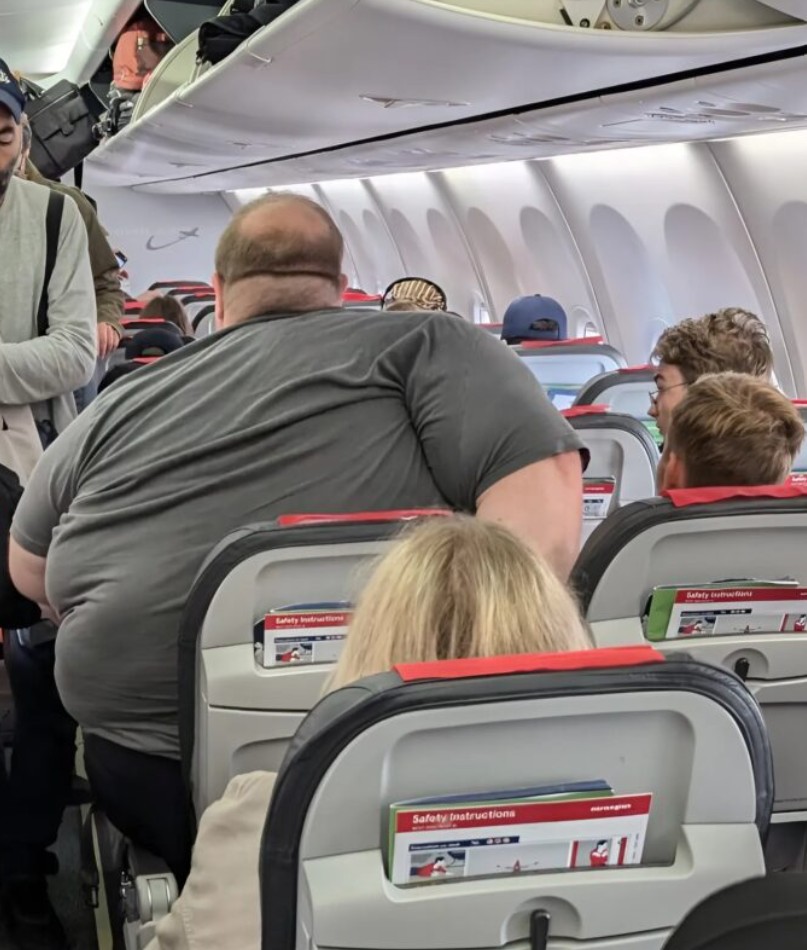
The airplane cabin was nearly full now. Overhead bins slammed shut one after another, seatbelts clicked into place, and the usual pre-flight hum filled the air. In the middle of it all, a small moment began to draw unexpected attention.
In one row, a man in a gray T-shirt had taken the aisle seat. His broad build made the already tight spacing feel even more compressed, leaving the middle seat noticeably restricted. A few passengers nearby exchanged subtle glances. It wasn’t loud, but the tension was there — the kind that builds quietly when people aren’t sure what will happen next.
When the flight attendant approached, her tone remained professional and calm. She asked the man if he could step aside briefly to discuss seating. Conversations around the row faded. A few heads turned. People were watching now, expecting discomfort… maybe even confrontation.
But that’s not what happened.
The man stood up slowly, without hesitation. He looked at the flight attendant, then briefly at the passengers seated nearby. His voice, when he spoke, was steady — not defensive, not embarrassed, just honest.
“I understand,” he said. “I know this might be uncomfortable for others, and I don’t want to make anyone’s trip harder.”
The tension in the row shifted almost instantly.
He continued, calmly explaining that he travels often and is aware of the space limitations on flights. “If there’s another option,” he added, “I’m more than willing to move or make adjustments. I just want everyone to have a comfortable flight.”
It wasn’t a long speech. It didn’t need to be.
What stood out was the tone — respectful, aware, and composed. In a moment where many might feel singled out or react emotionally, he chose something different: understanding.
The flight attendant nodded, clearly appreciative of the response. She assured him they would check for available seating options and asked him to wait just a moment in the aisle. Meanwhile, something subtle but noticeable happened among the surrounding passengers.
The whispers stopped.
The glances softened.
One passenger in the row ahead even turned slightly and said, “Hey, no worries at all. We’re all just trying to get where we’re going.” Another offered a small smile. The atmosphere, which had been tense just seconds earlier, felt lighter — almost cooperative.
It was a reminder of how quickly a situation can shift, not because of rules or authority, but because of how someone chooses to respond.
A few minutes later, the flight attendant returned with an update. There was an open seat with extra space a few rows back. She offered it to the man, who accepted with a simple “Thank you.” Before moving, he turned again to the row.
“Appreciate your patience, everyone,” he said.
And just like that, the moment passed.
But it left something behind.
In a space as confined and often stressful as an airplane cabin, people expect friction. Tight seating, delays, and discomfort can easily turn small issues into bigger ones. Yet this brief interaction showed a different possibility — one where awareness and calm can defuse tension before it escalates.
No arguments. No raised voices. No viral outburst.
Just a simple exchange handled with dignity.
By the time the plane began taxiing, most passengers had returned to their routines — headphones on, phones in hand, eyes out the window. But for those who had witnessed the moment, there was a quiet understanding that something meaningful had happened.
Not dramatic. Not loud.
Just human.
 admin
admin