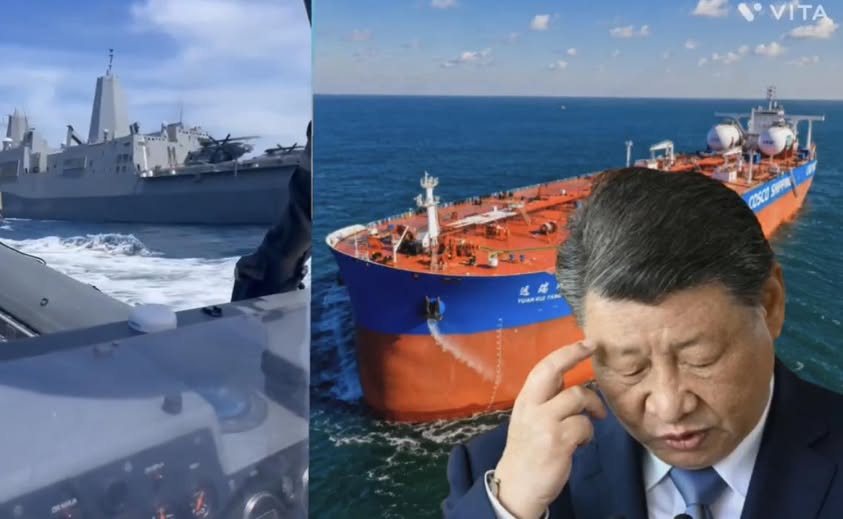
The collapse of the recent peace talks between the United States and Iran has rapidly escalated tensions, with the U.S. moving decisively to exert pressure on Tehran. On April 13, 2026, the United States Navy initiated a naval blockade targeting Iranian ports and coastal areas near the Strait of Hormuz, one of the most strategically vital waterways in the global energy market. This action represents a significant shift in U.S. policy, aiming to directly disrupt Iran’s primary source of revenue—its oil exports.
The Strait of Hormuz serves as a critical chokepoint through which a substantial portion of the world’s oil supply passes. By focusing on this region, the United States is leveraging its naval dominance to limit Iran’s ability to export crude oil, thereby constraining the country’s economic lifeline. Early indicators suggest that the blockade is already having an immediate and tangible impact on maritime traffic linked to Iranian oil shipments.
Shipping data from April 13 confirms that at least two oil tankers altered their routes shortly after the blockade was enforced at approximately 10 a.m. EDT. One vessel, the Rich Starry, flying under the flag of Malawi and reportedly carrying oil destined for China, reversed course shortly after approaching the Strait of Hormuz. The tanker had departed from Sharjah anchorage but turned back within minutes of nearing the chokepoint, signaling the seriousness with which shipping operators are treating the U.S. action.
A second vessel, the Ostria, registered under Botswana and partially loaded with oil tied to Chinese interests, also reversed course under similar circumstances. Reports suggest a third tanker may have taken comparable action, though details remain less consistent. Nonetheless, the pattern is clear: commercial shipping entities are responding quickly to the increased risk and uncertainty created by the U.S. naval presence and enforcement measures.
Importantly, the blockade appears to be selective in nature. While vessels directly involved in Iranian oil trade are being targeted, neutral shipping traffic transiting the Strait of Hormuz to other destinations is still being permitted. This approach allows the United States to apply economic pressure on Iran while attempting to avoid a broader disruption to global trade and energy markets.
The strategic objective behind this move is to significantly reduce Iran’s oil revenue, which is estimated to generate hundreds of millions of dollars per day. By constraining this income stream, the United States aims to weaken Iran’s financial capacity to sustain its regional influence and advance its nuclear program. The policy reflects a broader effort to compel Tehran to return to negotiations under conditions more favorable to Washington, particularly concerning nuclear development and regional security issues.
The blockade also sends a clear signal to other global actors, especially China, which has been a major importer of Iranian crude oil. The swift reaction of tankers linked to Chinese interests highlights the influence of U.S. naval power in the region. Rather than testing the limits of the blockade, shipping operators appear to be opting for caution, indicating a recognition of the risks involved in challenging U.S. enforcement.
From a geopolitical perspective, the situation underscores the continuing importance of military strength in shaping international outcomes. The United States is demonstrating its willingness to use hard power to achieve strategic objectives, particularly in regions that are critical to global energy supply. At the same time, the move raises concerns about potential escalation, as Iran may seek to respond through asymmetric means or by increasing tensions in other areas of the Middle East.
In conclusion, the U.S. naval blockade of Iranian oil exports marks a decisive and high-stakes development following the breakdown of diplomatic efforts. Early evidence suggests that the strategy is already disrupting Iran’s oil trade and influencing the behavior of international shipping. Whether this pressure will successfully bring Iran back to the negotiating table remains to be seen, but the immediate impact is undeniable. The situation continues to evolve, with significant implications for global energy markets, regional stability, and international diplomacy.
 admin
admin