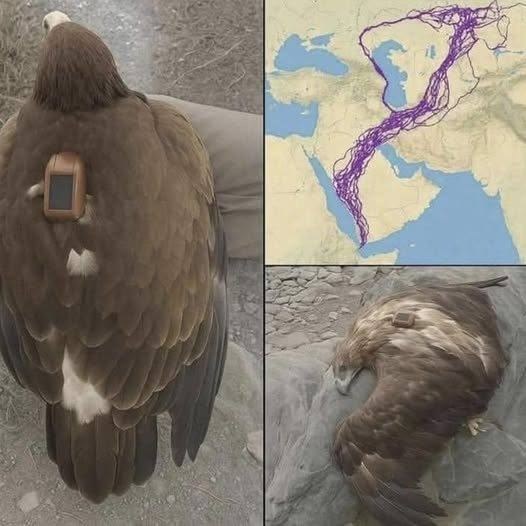
For centuries, migratory birds have followed invisible pathways across the globe. These journeys, often spanning thousands of kilometers, connect continents, ecosystems, and climates. Birds rely on instinct, environmental cues, and learned behavior to navigate routes that have existed long before modern civilization.
In the image, the map filled with dense purple lines represents one such journey. Each line traces the movement of the bird over time, revealing patterns that scientists work tirelessly to understand. These paths may stretch across Europe, the Middle East, and Africa, crossing deserts, mountains, and seas.
Tracking devices, like the one seen attached to the bird, have revolutionized our understanding of migration. They allow researchers to gather real-time data about flight paths, resting points, and environmental challenges. Without such technology, much of what we know about migratory behavior would remain a mystery.
The small device on the bird’s back is likely a GPS tracker. These devices are carefully designed to be lightweight and minimally invasive, ensuring they do not interfere with the bird’s natural behavior. Scientists use them to monitor:
- Migration routes
- Feeding patterns
- Breeding locations
- Environmental threats
This information is invaluable. It helps conservationists identify critical habitats, understand population declines, and develop strategies to protect endangered species.
However, the presence of the tracker also raises important questions about the intersection of human intervention and wildlife. While the intention is to help, it reminds us that even well-meaning actions must be carried out responsibly and ethically.
The map in the image is more than just a collection of lines—it is a story. It shows how one bird traveled vast distances, possibly moving between breeding grounds in Europe or Asia and wintering areas in Africa.
Such migrations are not easy. Birds face countless challenges along the way, including:
- Extreme weather conditions
- Limited food availability
- Predators
- Human-made obstacles like power lines and urban development
Despite these challenges, migratory birds continue their journeys year after year, demonstrating remarkable resilience and adaptability.
The final image of the bird lying motionless is a stark contrast to the dynamic movement shown on the map. It suggests that the journey came to an abrupt and tragic end.
While the exact cause is not clear from the image alone, there are several known threats that migratory birds commonly face:
Changes in climate can alter migration patterns and disrupt food sources. Extreme heat, storms, and droughts can make survival difficult.
2. Human Activity
Urban expansion, deforestation, and infrastructure development can destroy habitats and create dangerous obstacles.
3. Illegal Hunting and Poisoning
In some regions, birds of prey are at risk from illegal hunting or exposure to toxic substances.
4. Electrocution and Collisions
Power lines and wind turbines can pose significant risks, especially along migration routes.
Each of these threats highlights the challenges that migratory birds must overcome—and the role humans play in both causing and potentially solving these problems.
Why Migration Matters
Migration is not just about birds traveling from one place to another. It is a vital ecological process that supports biodiversity and environmental health.
Migratory birds contribute to ecosystems by:
- Controlling insect populations
- Pollinating plants
- Dispersing seeds
- Maintaining balance in food chains
When migratory patterns are disrupted, entire ecosystems can be affected. This makes the conservation of these species not only important for the birds themselves but for the environment as a whole.
The Importance of Conservation Efforts
Images like this serve as a reminder of why conservation efforts are so crucial. Protecting migratory birds requires international cooperation, as these animals cross multiple borders during their journeys.
Key conservation strategies include:
Protecting Habitats
Ensuring that birds have safe places to rest, feed, and breed is essential.
Reducing Human Impact
Minimizing pollution, regulating hunting, and designing safer infrastructure can help reduce risks.
Monitoring Populations
Tracking devices and research programs provide valuable data that can guide conservation efforts.
Raising Awareness
Educating the public about the importance of migratory birds can lead to greater support for conservation initiatives.
 admin
admin