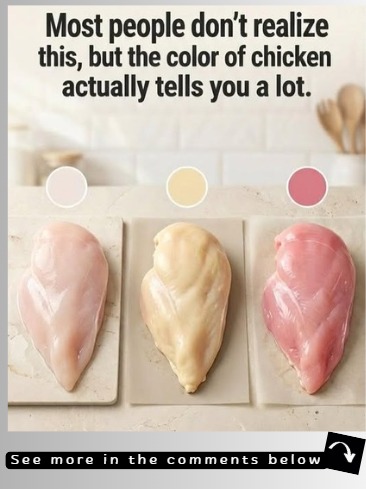
That chicken in your shopping cart may be hiding more than you think. One package looks pale and almost pink, while another has a deeper yellow tone. The cuts are the same, the prices are similar, yet the appearance is noticeably different.
Naturally, this raises questions for many shoppers: does color indicate better quality, better taste, or better nutrition? With chicken, color often influences perception—but it rarely tells the full story.
Humans instinctively judge food by sight. We associate vibrant colors with freshness and quality, and dull or pale tones with something inferior. Chicken, however, doesn’t follow those simple rules. The color of chicken meat or skin is influenced by multiple factors, and safety or quality cannot be determined by color alone.
Pale chicken is most common in large-scale industrial farming. In these systems, birds are bred to grow quickly, raised indoors, and fed carefully formulated diets designed for efficiency. This approach produces uniform meat that is light in color, mild in flavor, and widely available at lower prices. The paler appearance doesn’t mean the chicken is unsafe or unhealthy—it reflects how the bird was raised and what it was fed.

Yellow chicken, on the other hand, is often associated with traditional or small-scale farming. The deeper color usually comes from the bird’s diet rather than from processing methods. Feed rich in natural pigments—such as corn, alfalfa, or marigold extract—can result in yellowish skin and fat. Chickens that grow more slowly and have more movement may also develop firmer texture and a stronger flavor, which many people associate with “old-fashioned” or home-raised chicken.
However, this is where color can be misleading. Some producers intentionally adjust feed formulas to enhance yellow coloring because they know consumers often equate it with higher quality. In these cases, the color is a marketing tool rather than a true reflection of better living conditions or superior nutrition. A bright yellow chicken isn’t automatically more ethical, healthier, or tastier than a pale one.
What truly matters lies beyond appearance. Labels provide far more reliable information than color alone. Terms like organic, free-range, pasture-raised, or Certified Humane indicate how the animal was raised, what it was fed, and whether welfare standards were followed. These certifications suggest access to outdoor space, more natural diets, and improved living conditions compared to conventional farming.
Freshness is another key factor that color doesn’t reliably indicate. A fresh chicken should have a clean, neutral smell and firm texture. Sliminess, sour odors, or sticky surfaces are warning signs regardless of whether the meat is pale or yellow. Proper storage and handling—from farm to store to home—play a major role in quality and safety.
Flavor and texture also depend on cooking methods, age of the bird, and how it was processed. A pale chicken can be juicy and delicious when cooked properly, while a yellow chicken can still be dry or bland if mishandled. Nutrition differences between pale and yellow chicken are generally minor; protein content remains similar, and fat-soluble nutrients vary more with overall diet than color alone.
In short, there is no single “right” color for chicken. Color is just one clue—and often a superficial one. It doesn’t guarantee better taste, higher nutrition, or better animal welfare. Relying solely on appearance can lead to assumptions that don’t match reality.
The smartest approach is to look past the surface. Read labels carefully, buy from sources you trust, and choose based on values that matter most to you—whether that’s price, flavor, animal welfare, or sustainability. The real story of your chicken isn’t told by its color, but by how it was raised, fed, processed, and handled long before it reached your cart.
 admin
admin