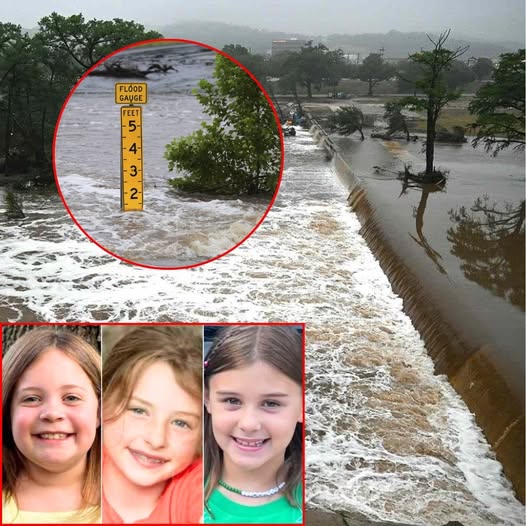
New details have been revealed about the young girls who remain missing after devastating floods struck central Texas this week, leaving communities devastated and families desperate for answers.
On Friday, July 4, catastrophic flash flooding hit the Texas Hill Country, especially along the Guadalupe River, after an intense storm dumped torrential rain that caused water levels to surge rapidly. The river reached its second-highest level on record, overwhelming roads, camps, homes, and recreational areas in Kerr County and surrounding communities.
Among the hardest-hit was Camp Mystic, a longtime Christian girls-only summer camp located near the river in Hunt, Texas. Floodwaters overtook cabins and low-lying areas before many campers or staff could evacuate, turning a routine holiday weekend into a life-threatening disaster.
In a news conference this week, Texas Lt. Gov. Dan Patrick confirmed that 23 girls remain unaccounted for out of the approximately 750 campers and staff who were at Camp Mystic when the flooding hit. Officials have said they cannot yet declare these girls deceased; rather, they are still considered missing as search and rescue teams continue to comb the area for signs of survivors or victims.
Among those still missing are several young girls whose families have been speaking with local media, sharing heartbreak, hope, and urgency as they continue their own searches alongside official efforts. One of the missing children is 8-year-old Hadley Hanna of Dallas, whose father has been on the ground in Kerr County, joining volunteer and professional search teams. Others, including Eloise Peck and Lila Bonner, friends from the same city, were reportedly staying with several campers in a cabin that was struck by rising waters.
At least 24 people have died in the flooding so far — with the majority of fatalities confirmed in Kerr County and another reported in Kendall County — as the true scale of the disaster becomes increasingly clear.
The disaster has prompted an enormous and ongoing emergency response. Local, state, and federal agencies have mobilized dozens of teams, including search and rescue units, helicopters, watercraft, and volunteers, in an around-the-clock effort to locate missing residents and recover victims from remote or debris-covered areas. Emergency operations have been complicated by debris, rugged terrain, and high water levels along miles of riverbank.
Parents, siblings, and extended families have joined the search or waited with anxiety and pain at reunification centers and nearby shelters. For many, every update is scrutinized for signs of progress. For others, each passing hour without news deepens the emotional toll.
Officials and first responders have been praised for their tireless work, even as community members struggle to understand how a familiar holiday weekend could turn into one of the deadliest natural disasters in recent Texas history. In the aftermath, families of missing girls have shared photos and memories of their loved ones, asking the public to keep them in thoughts and prayers and urging anyone with information to come forward.
Public vigils and memorials have also begun forming in towns across Texas and beyond, with people displaying flowers, candles, and ribbons as symbols of solidarity and mourning. Residents have described a sense of disbelief that such widespread destruction could happen so quickly, especially along a river that in normal conditions is a peaceful community landmark.
While the number of confirmed missing girls from Camp Mystic remains high, authorities emphasize that ongoing search operations could change as teams access new areas, clear debris, or receive new reports. The situation remains fluid, and the priority for officials is locating the missing, providing support to families, and continuing rescue and recovery efforts for as long as necessary.
This devastating event has not only brought national attention to the vulnerability of areas prone to flash flooding, but has also renewed conversations about flood warning systems, emergency preparedness, and the importance of rapid response during extreme weather emergencies.
As the search continues, families and communities across Texas hold onto hope while honoring those already lost, praying for the safe return of the missing young girls, and working together to navigate the enormous aftermath of one of the state’s most tragic natural disasters in recent memory.
 admin
admin