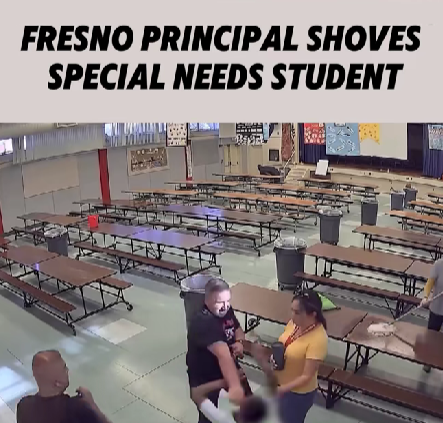
A school surveillance video from Fresno has ignited widespread outrage after capturing a confrontation between a school principal and a special needs student inside a cafeteria. What should have been a safe, structured environment for learning has now become the center of an intense public debate about discipline, authority, and how schools handle vulnerable students.
The footage, which has been shared widely online, shows a busy cafeteria filled with long tables and students moving about. In the middle of the room, a tense interaction unfolds between an adult staff member identified as the principal and a student described as having special needs. Within moments, physical contact occurs — a moment that viewers say was shocking and deeply troubling.
Parents and advocates reacted almost immediately.
Many questioned why a situation involving a student with special needs escalated to physical force at all. “There are protocols for this,” one commenter wrote. “This should never be the response.” Disability advocates emphasized that students with special needs often experience heightened stress, sensory overload, or difficulty communicating — making calm, trained intervention essential.
School officials later confirmed that the incident is under investigation. They stated that the safety and well-being of students is their highest priority and that they are reviewing the footage alongside district policies to determine whether proper procedures were followed.
Experts in special education stress that physical interventions should always be a last resort — and only carried out by trained personnel using approved techniques. Even then, the goal is protection, not punishment. When authority figures act in ways that appear aggressive, the emotional impact on students can be severe and long-lasting.
Psychologists note that public incidents like this can be traumatic not only for the student involved, but also for classmates who witness it. Seeing a trusted adult lose control can undermine a child’s sense of safety at school.
The video has also reignited conversations about accountability in educational leadership. Principals are often seen as the highest authority on campus — responsible not just for discipline, but for setting the tone of compassion, patience, and professionalism. When that standard appears to be broken, trust can erode quickly.
At the same time, some voices urged caution against rushing to judgment. They pointed out that short clips don’t always show what led up to a moment or what efforts were made beforehand to de-escalate the situation. Still, even among those urging restraint, many agreed that the optics of the incident were deeply concerning.
Parents of children with special needs shared personal stories in response to the footage, describing years of advocacy to ensure their children are treated with understanding rather than force. “This is every parent’s fear,” one wrote. “That our child will be misunderstood and handled instead of helped.”
The district has reportedly placed the principal on administrative leave while the investigation proceeds. Officials have encouraged families to come forward with concerns and assured the community that appropriate action will be taken based on the findings.
Beyond this single case, the incident has highlighted a broader issue: the need for better training, support, and resources for educators working with special needs students. Teachers and administrators often face high-stress situations, but experts argue that preparation and emotional regulation are non-negotiable when working with vulnerable populations.
As the investigation continues, many are watching closely — not just for disciplinary outcomes, but for what this moment represents. Schools are meant to be places of protection, growth, and understanding. When that expectation is shaken, rebuilding trust takes more than statements. It takes action.
For now, one thing is clear: the video has forced an uncomfortable but necessary conversation. How schools respond next may determine whether this moment becomes just another headline — or a turning point toward better care, accountability, and compassion for students who need it most.
 admin
admin