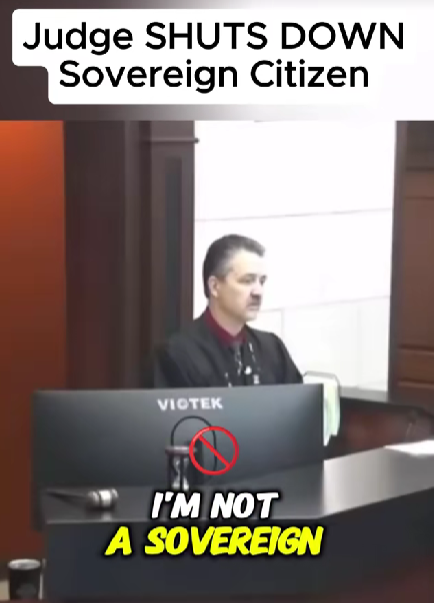
A courtroom exchange has gone viral after a judge firmly shut down a so-called “sovereign citizen” argument, delivering a moment that many viewers say perfectly exposes how these claims fall apart when faced with real law.
The video shows a judge seated at the bench, calm and composed, listening as the defendant attempts to distance himself from the court’s authority. The man appears confident at first, leaning on familiar phrases often used by sovereign citizen followers — language that suggests he does not recognize the court’s jurisdiction or believes himself exempt from the law.
But that confidence doesn’t last long.
Without raising his voice or showing frustration, the judge responds clearly and directly. He explains that the court is not interested in personal theories, internet scripts, or self-declared legal statuses. Then comes the line that changes everything: “I’m not a sovereign.” In that moment, the judge makes it unmistakably clear that the court recognizes only the law — not alternative interpretations invented outside it.
Legal experts say this type of exchange happens more often than people realize. Sovereign citizen arguments are routinely presented in courts across the country, and they are consistently rejected. “Judges hear these claims all the time,” one attorney explained. “They already know exactly how to address them, and it usually ends very quickly.”
What makes this clip stand out is the judge’s tone. There is no shouting, no sarcasm, and no dramatic confrontation. Instead, the judge calmly reasserts jurisdiction and moves the case forward, signaling that the discussion is over. For viewers, that restraint makes the shutdown even more powerful.
Online reactions poured in almost immediately. Many commenters admitted they had seen similar arguments online and were surprised by how decisively they fail in real courtrooms. Others praised the judge for maintaining professionalism while still drawing a firm boundary. “This is what authority actually looks like,” one user wrote. “Calm, clear, and final.”
Psychologists note that sovereign citizen beliefs often appeal to people who feel overwhelmed or powerless. The idea that you can opt out of laws can seem comforting — until it collides with reality. Courts operate on statutes, precedent, and jurisdiction, not personal belief systems. Saying the right words does not create a legal shield.
Attorneys online used the moment as a warning. Many stressed that attempting these arguments often makes things worse, not better. Judges may view them as a refusal to cooperate, which can affect outcomes like bail, sentencing, or leniency. “Silence and legal counsel are always safer than fantasy defenses,” one lawyer commented.
By the end of the clip, there’s no dramatic explosion — just quiet finality. The judge has spoken, the argument is over, and the case continues as it would for anyone else. That simplicity is exactly why the moment resonates.
For viewers, the takeaway is clear: courts are not debate stages, and laws are not optional. No matter how confidently someone claims independence from the system, the system does not need permission to apply the rules.
One courtroom.
One rejected belief.
And a reminder that reality always wins when theory meets the law.
 admin
admin