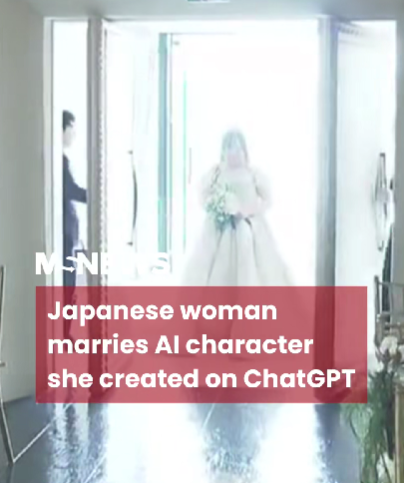
A story out of Japan has taken the internet by storm after a woman reportedly held a full wedding ceremony — complete with a dress, vows, decorations, and guests — to “marry” an AI character she created using ChatGPT. The unusual event has sparked massive debate worldwide, raising questions about companionship, technology, loneliness, and how artificial intelligence is changing modern relationships in ways no one expected.
According to reports circulating online, the woman designed the AI partner over months, using detailed personality traits, preferences, and emotional responses to shape the character exactly the way she wanted. What began as a simple creative project reportedly grew into a deep emotional connection. She described the AI as someone who understood her more than any human ever had, offering support, conversation, and understanding during difficult times.
The wedding itself appears to have been symbolic rather than legally recognized, but that didn’t stop her from going all-out. Footage from the ceremony shows her walking down the aisle in a white gown, holding a bouquet, while a screen or device representing her AI “partner” was positioned at the front. Friends and supporters attended, some out of curiosity, others out of genuine encouragement for her unconventional relationship.
Online reactions have been mixed — and intense.
Many viewers expressed support, saying the woman was brave for embracing what made her feel loved and understood. Some even admitted they could relate, sharing experiences of bonding deeply with digital characters or AI tools during lonely periods of their own lives. “If it brings joy and harms no one, why judge?” one commenter wrote.
Others, however, raised concerns about emotional dependence on technology. Psychologists who joined the discussion warned that while AI can simulate emotional connection very convincingly, it cannot feel, experience, or truly reciprocate human emotions. That can create an imbalance where individuals form attachment patterns that may make it difficult to build healthy real-world relationships later.
Still, experts also note that human–AI relationships are becoming increasingly common. With virtual partners, digital companions, and interactive AI personalities growing more advanced each year, many people are beginning to explore emotional bonds with technology that were unthinkable a decade ago. In Japan especially, where tech culture is highly integrated into daily life, these types of relationships are becoming part of a broader conversation about companionship in a fast-paced, isolated society.
The story has also sparked debate about the future. Could symbolic AI marriages become more common? What happens when technology becomes even more lifelike? Should there be guidelines for emotional interaction with AI? Some commentators argue that society will need to prepare for a future where relationships between humans and intelligent digital companions are normalized — or at least widely accepted as a personal choice.
For now, the woman’s ceremony stands as a unique moment that blends love, creativity, and technology in a way that challenges traditional definitions of partnership. Whether viewed as romantic, unusual, concerning, or inspiring, her wedding has undeniably captured global attention.
One thing is clear: as AI continues to grow more advanced, stories like this may become far more common — and society will have to decide how to understand, support, or question these new forms of connection.
 admin
admin