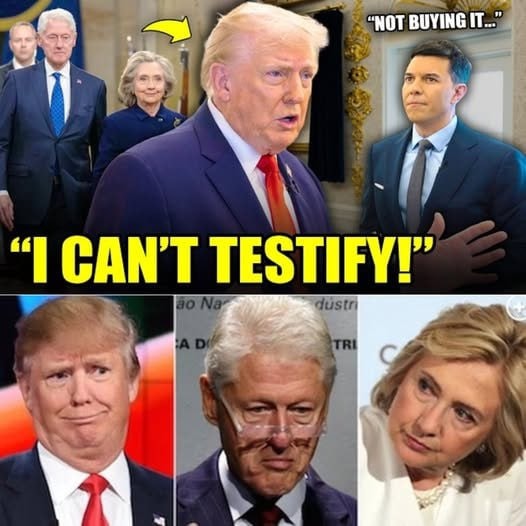
As calls intensify in Washington to release the full set of documents connected to Jeffrey Epstein, attention has increasingly shifted toward a single, unresolved question: whether former President Donald Trump will agree to testify under oath if asked to do so. The issue has become part of a broader national conversation about transparency, accountability, and how public figures respond when past associations return to the spotlight.
Trump has publicly acknowledged that he knew Epstein years ago, describing him in earlier remarks as someone who enjoyed the company of “beautiful women,” some of whom he said were “on the younger side.” In later years, Trump stated that he had distanced himself from Epstein and had not maintained a relationship. Like many aspects of the Epstein case, the historical record includes a mix of statements, recollections, and disputed interpretations that continue to be examined in legal and political arenas.
Additional scrutiny has emerged from past civil litigation and testimony connected to Epstein’s network of associates. One widely reported lawsuit, filed under the pseudonym “Katie Johnson,” included serious allegations against Trump related to events said to have occurred when the accuser was a minor. The case was later withdrawn, Trump denied the allegations, and no criminal conviction resulted. Even so, the existence of the filing has remained part of public discussion surrounding the broader Epstein controversy—illustrating how unresolved or unproven claims can continue to influence political debate long after court proceedings end.
The political dimension of the issue sharpened when former President Bill Clinton and former Secretary of State Hillary Clinton signaled willingness to testify publicly if called before Congress regarding Epstein-related matters. Some lawmakers from both major parties have argued that similar cooperation from Trump would help reinforce public confidence in any investigative process tied to the case. Others counter that legal testimony decisions are complex and often guided by counsel, precedent, and constitutional considerations rather than public pressure alone.
Importantly, legal experts frequently emphasize a key principle: declining to testify, by itself, does not establish guilt or wrongdoing. In the American legal system, individuals—especially in politically charged investigations—may choose silence for many reasons, including strategic, legal, or personal concerns. Still, in the court of public opinion, unanswered questions often take on a life of their own, fueling continued debate across media, politics, and social platforms.
The renewed focus on Epstein-related records reflects something larger than any single individual. For many Americans, the issue symbolizes long-standing frustrations about power, privilege, and whether influential figures are examined with the same rigor as everyone else. For others, it raises concerns about fairness, due process, and the risk of politicizing unresolved allegations.
As lawmakers weigh next steps and investigators continue reviewing historical evidence, the conversation shows little sign of fading. Whether through testimony, document releases, or future hearings, pressure for clarity is likely to persist.
For now, the central question remains unanswered—leaving the public watching closely to see what transparency, accountability, and truth may ultimately look like in one of the most scrutinized cases in recent political memory.
 admin
admin