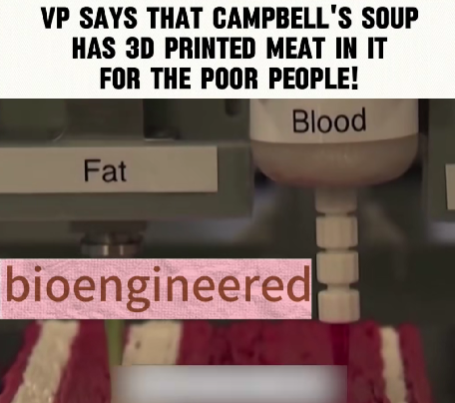
A surprising and dramatic claim has been circulating online, leaving countless viewers stunned and confused. A viral post suggests that Campbell’s soup contains “3D-printed meat” and that this supposed ingredient is intentionally made for low-income families. The image accompanying the claim — featuring labels like “fat,” “blood,” and “bioengineered” above a machine nozzle — has ignited intense reactions across social platforms. But behind the shock value and sensational captions, the real story is far more complex, and far less alarming than the internet has made it seem.
The controversy began when a short clip of a laboratory demonstration resurfaced online, showcasing experimental food-printing technology. In the original context, the video was meant to illustrate how researchers are developing alternative food sources for sustainability studies — not to expose a secret ingredient in consumer products. However, once the clip was taken out of context and paired with bold claims, it quickly spiraled into a dramatic narrative that millions clicked on instantly.
The statement attributed to a political figure — claiming that a well-known soup brand uses this technology strictly “for poor people” — was never verified or supported by any official source. Fact-checking groups and food industry experts have repeatedly emphasized that such a claim is not based on any real evidence. Campbell’s itself has publicly stated that the company does not use 3D-printed meat in any of its products, nor does it distribute different formulas based on income or location. Yet in today’s fast-moving digital world, sensational headlines often outrun the truth.
The image circulating online further complicates things by blending real scientific technology with misleading framing. The machine shown is part of experimental lab research exploring future possibilities for food production — the same type of innovation used in plant-based meat development, medical nutrition studies, and environmental sustainability testing. While the visual looks dramatic, it has no connection to mass-market canned goods found in grocery stores.
Experts warn that viral misinformation like this spreads so easily because it taps into very real public anxieties about food safety, corporate transparency, and the rapid evolution of biotechnology. Many people feel overwhelmed by the pace of scientific advancement, and images that appear unusual or unfamiliar can quickly fuel fear. That emotional reaction makes it easy for false or exaggerated claims to take hold before anyone has the chance to check the facts.
Instead of reinforcing panic, nutrition specialists encourage consumers to focus on factual food labeling, certified safety standards, and regulatory guidelines. In the United States, all packaged food products must clearly list ingredients and follow strict testing procedures before being approved for sale. Companies cannot secretly include experimental substances in their products — and any ingredient considered “bioengineered” must be openly disclosed on the label as required by federal law.
What this viral moment truly reveals is not hidden ingredients in soup, but how fast misinformation can spread when a dramatic image is paired with a shocking headline. It underscores the importance of slowing down, reading carefully, and verifying sources before sharing content that could cause unnecessary fear.
As the conversation continues online, many hope this becomes a reminder that not every eye-catching clip reflects reality — and that understanding the truth often requires looking beyond the surface of a sensational post.
 admin
admin