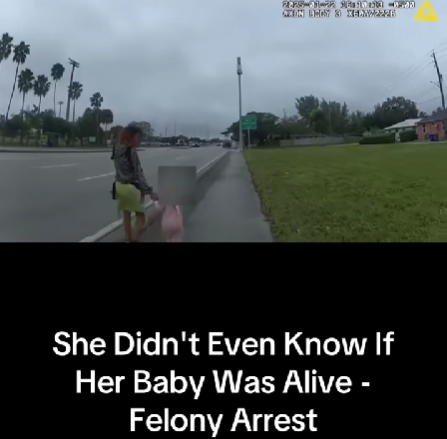
A heartbreaking video has surfaced online showing a young mother being taken into custody while pleading for answers about her missing baby. The footage, recorded from an officer’s body camera, has sparked outrage and sorrow across social media as millions question how a situation so tragic could unfold with such apparent coldness.
In the now-viral clip, the visibly distressed woman is seen walking along a busy road, holding a small pink stroller and crying uncontrollably. Officers approach, issuing commands as she desperately tries to explain that she doesn’t know where her baby is—or if the child is even alive. Her confusion, panic, and fear are evident, yet the officers proceed to detain her on suspicion of felony child neglect.
According to police reports, the woman had been found wandering near an intersection after neighbors called 911 to report erratic behavior. When questioned about her baby, her statements were inconsistent—she alternated between saying the baby was with a relative and then claiming she couldn’t remember what happened. Officers immediately launched a search while restraining her for safety reasons, but the emotional tone of the arrest left many viewers disturbed.
Witnesses say the woman appeared to be in deep shock, possibly suffering from a mental health crisis or trauma-induced disorientation. “She wasn’t violent. She wasn’t resisting. She was terrified,” said one bystander who watched the arrest unfold. “She just kept asking if her baby was okay.”
Police have since confirmed that the child was later located and is safe, currently under the care of child protective services. However, the mother remains in custody pending psychological evaluation and investigation into the circumstances surrounding the incident. Authorities stress that the arrest was made out of concern for both her and the child’s welfare, but the way it was handled has become the center of public controversy.
Critics argue that law enforcement failed to show compassion to a woman in visible distress. “This isn’t justice—it’s trauma on top of trauma,” wrote one commenter online. “How can you handcuff a mother who doesn’t even know if her baby is alive?” Mental health advocates have joined the discussion, urging reforms that ensure officers are better trained to recognize and respond to psychological crises with empathy rather than immediate criminalization.
Experts note that cases like this highlight the gap between law enforcement protocols and the growing need for crisis intervention teams. “Police often find themselves responding to situations that are more medical or psychological than criminal,” one crisis specialist explained. “Without proper training, the outcome can easily become tragic or unnecessarily harsh.”
As the investigation continues, the video remains a haunting reminder of how fragile and misunderstood human suffering can be. Behind the handcuffs and the flashing lights stood a mother, not a criminal—one caught between confusion, fear, and a desperate plea for her child.
 admin
admin